



Adrenergic Receptor
Beta Receptor
Adrenergic receptors are a class of G protein-coupled receptors that are targets of the catecholamines, especially norepinephrine and epinephrine. Many cells possess these receptors, and the binding of a catecholamine to the receptor will generally stimulate the sympathetic nervous system. The sympathetic nervous system is responsible for the fight-or-flight response, which includes widening the pupils of the eye, mobilizing energy, and diverting blood flow from non-essential organs to skeletal muscle. There are two main groups of adrenergic receptors, α and β, with several subtypes. α receptors have the subtypes α1 and α2. β receptors have the subtypes β1, β2 and β3. All three are linked to Gs proteins, which in turn are linked to adenylate cyclase. Agonist binding thus causes a rise in the intracellular concentration of the second messenger cAMP. Downstream effectors of cAMP include cAMP-dependent protein kinase (PKA), which mediates some of the intracellular events following hormone binding.
Adrenergic Receptor Isoform Specific Products
All Product Categories
-
Adrenergic Receptor Inhibitors
(267)
View all products
-
Adrenergic Receptor Agonists
(502)
View all products
-
Adrenergic Receptor Antagonists
(545)
View all products
-
Adrenergic Receptor Activators
(45)
View all products
-
Adrenergic Receptor Modulators
(19)
View all products
-
Adrenergic Receptor Degrader
(1)
View all products
-
Adrenergic Receptor Controls
(8)
View all products
-
Adrenergic Receptor Substrates
(3)
View all products
-
Adrenergic Receptor Ligands
(17)
View all products
-
Adrenergic Receptor Related Products (1622)
Related Products (1622)

-
Antibodies (4)
-
Adrenergic Receptor Isoform Comparison
-
Scoulerine hydrochloride
 0 ImagesCat. No.: HY-N1255ACAS No.: 51486-68-1Synonyms: (-)-Scoulerine hydrochloride; Discretamine hydrochlorideScoulerine ((-)-Scoulerine; Discretamine) hydrochloride is a multi-target inhibitor with anti-tumor and antioxidant activities. Scoulerine hydrochloride mainly targets the PI3K/Akt/mTOR signaling axis and α1D-adrenergic receptor, disrupts microtubule structure, and induces cell cycle arrest and apoptosis. Scoulerine hydrochloride effectively inhibits mitochondrial dehydrogenase activity, targets GABA receptors and BACE1, and suppresses the proliferation, migration, invasion, epithelial-mesenchymal transition and stem cell properties of cancer cells. Scoulerine hydrochloride also exhibits multiple pharmacological activities including anti-Plasmodium falciparum, antibacterial, antiemetic and antitussive effects, and regulates endoplasmic reticulum stress and mitochondrial function (modulates Bax, Bcl-2 and cytochrome c). Scoulerine hydrochloride is applicable to research related to leukemia, ovarian cancer, and colorectal cancer.
-
Indoramin-d5
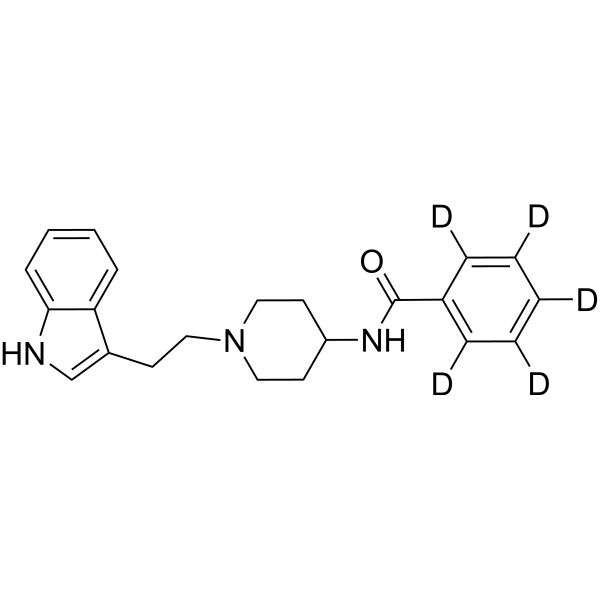 0 ImagesCat. No.: HY-12760SCAS No.: 57165-41-0Synonyms: Indoramine d5; Wy-21901 d5Indoramin-d5 is deuterium labeled Indoramin, which is a piperidine antiadrenergic agent.
-
Adrenalone hydrochloride (Standard)
 0 ImagesAdrenalone (hydrochloride) (Standard) is the analytical standard of Adrenalone (hydrochloride). This product is intended for research and analytical applications. Adrenalone hydrochloride is an adrenergic agonist used as a topical vasoconstrictor and hemostatic. Adrenalone hydrochloride is an inhibitor of dopamine β oxidase. Adrenalone hydrochloride is chemically similar to known norepinephrine transporter (NET) ligands with an IC50 of 36.9 μM.
-
Methoxyfenoterol
 0 ImagesCat. No.: HY-185289CAS No.: 47308-67-8Methoxyfenoterol is a β2-adrenergic receptor agonist. Methoxyfenoterol stimulates intracellular cAMP accumulation, inhibits tumor cell proliferation, induces G1 cell cycle arrest, upregulates cyclin-dependent kinase inhibitor p27, downregulates cyclin D1 and cyclin A, and inhibits Akt phosphorylation. Methoxyfenoterol crosses the blood-brain barrier and inhibits growth of astrocytoma xenografts. Methoxyfenoterol can be used for the research of astrocytoma, glioblastoma.
-
PNMT-IN-1
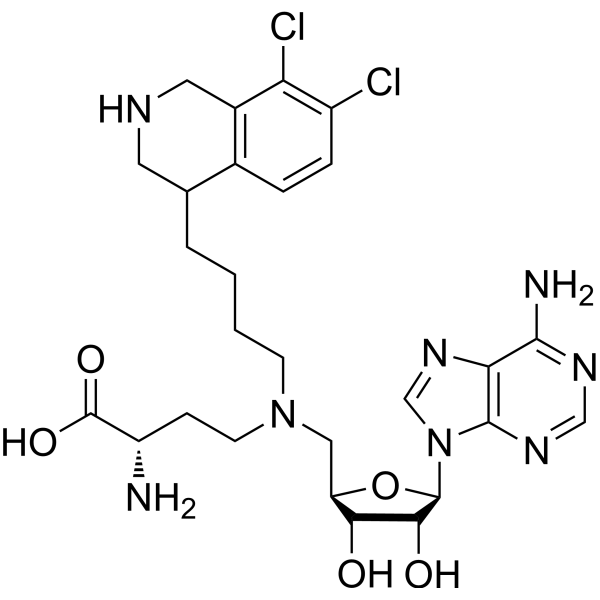 0 ImagesCat. No.: HY-149389PNMT-IN-1 (inhibtor 4) is a specific inhibitor of phenylethanolamine N-methyltransferas (PNMT) with a Ki value of 1.2 nM and a IC50 value of 81 nM. PNMT-IN-1 also inhibits the vitality of DNMT1 and DNMT3b, with the IC50 value of 61 μM and 17 μM, respectively, and has an antagonistic effect on epinephrine.PNMT-IN-1 (inhibtor 4 ) is a second generation inhibitor.
-
Bisoprolol-d5 hemifumarate
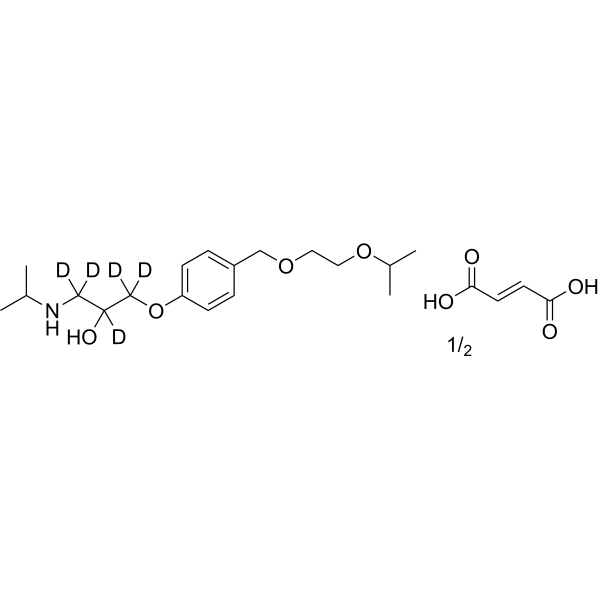 0 ImagesCat. No.: HY-120829SBisoprolol-d5 (hemifumarate) is deuterium labeled Bisoprolol (fumarate).
-
Ritodrine
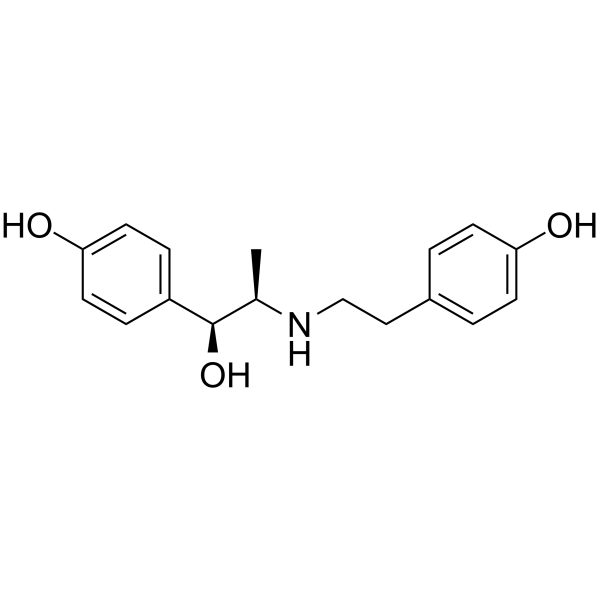 0 ImagesCat. No.: HY-B0452ACAS No.: 26652-09-5Synonyms: DU21220Ritodrine (DU21220) is a β-adrenergic agonist, also an effective smooth muscle and uterine relaxant. Ritodrine prolongs contraction interval, can be used for researching arrest premature labor.
-
AA 497 free base
 0 ImagesCat. No.: HY-121043CAS No.: 59605-49-1AA 497 free base is an adrenergic beta-2 agonist. AA 497 free base is a bronchodilator.
-
S32212
 0 ImagesCat. No.: HY-13974CAS No.: 847968-58-5S32212 is a serotonin type 2C receptor inverse agonist and an 2 adrenoceptor antagonist. S32212 exhibits antidepressant activity and can reduce immobility time in forced-swim test in rats.
-
AA 497
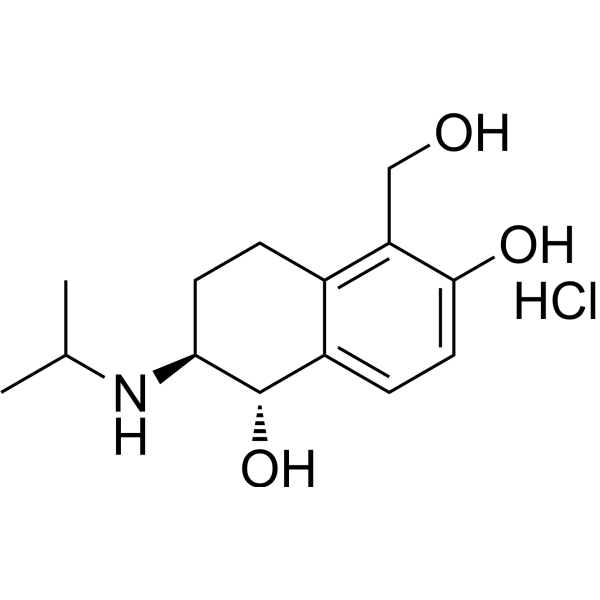 0 ImagesCat. No.: HY-121043ACAS No.: 65860-38-0AA 497 is an adrenergic beta-2 agonist. AA 497 is a bronchodilator.
-
Talsupram hydrochloride
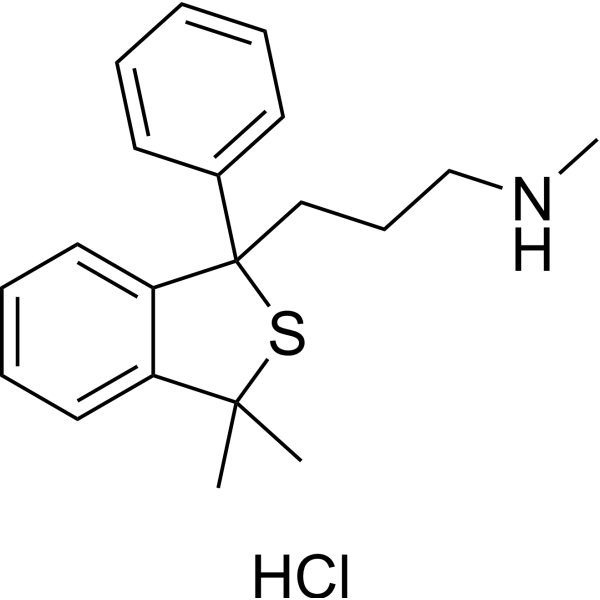 0 ImagesCat. No.: HY-103218CAS No.: 25487-28-9Talsupram (hydrochloride) is a selective norepinephrine inhibitor with high affinity for norepinephrine transporter (NET) and can be used in the study of neuropathic pain.
-
Oxaprotiline
 0 ImagesCat. No.: HY-122300ACAS No.: 56433-44-4Synonyms: (Rac)-LevoprotilineOxaprotiline ((Rac)-Levoprotiline) is a potent Norepinephrine (NE)/Noradrenaline (NA) uptake inhibitor. Oxaprotiline has antidepressant activity.
-
CAXII-IN-3
 0 ImagesCat. No.: HY-178030CAXII-IN-3 is an effective carbonic anhydrase (CA XII) inhibitor with a Ki of 53 nM. CAXII-IN-3 exhibits selective inhibition against multiple human CA subtypes with Kis of 5.3 μM, 75 nM, 1.9 μM, > 10 μM against CA I, CA II, CA IV and CA IX. CAXII-IN-3 mainly inhibits CA II and XII, and reduces aqueous humor production. CAXII-IN-3 exhibits β3-AR agonistic activity, can dilate retinal blood vessels, and improve optic nerve perfusion. CAXII-IN-3 can be used in the research of ocular disorders such as glaucoma.
-
Etoperidone hydrochloride
 0 ImagesCat. No.: HY-106617ACAS No.: 57775-22-1Etoperidone hydrochloride, an antidepressant agent, is an orally active serotonin and nor-adrenaline re-uptake antagonist. Etoperidone hydrochloride shows Kd values of 36 nM, 38 nM, 85 nM, and 570 nM for 5-HT2 receptor, α1-adrenergic receptor, 5-HT1A receptor, and α2-adrenergic receptor, respectively.
-
Acepromazine-d6 hydrochloride
 0 ImagesCat. No.: HY-W774927SCAS No.: 1173022-70-2Acepromazine-d6 hydrochloride is the deuterium labeled Acepromazine hydrochloride. Acepromazine (Acetopromazine) is a phenothiazine tranquilizeran and alpha-adrenoceptor antagonist.
-
Metoprolol fumarate
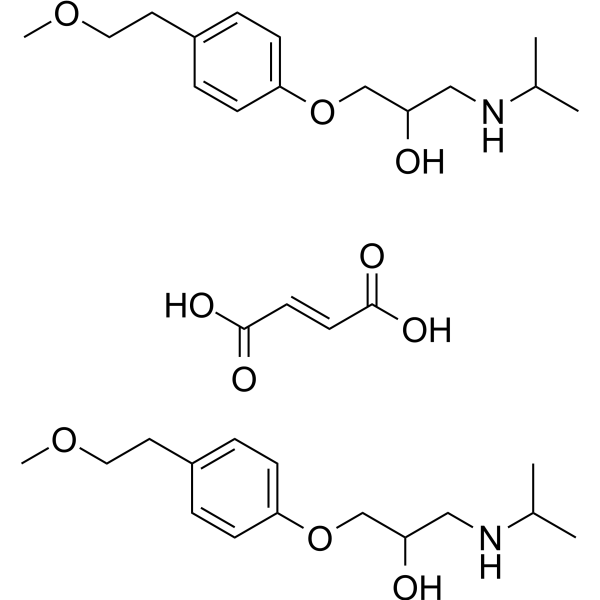 0 ImagesCat. No.: HY-17503CCAS No.: 80274-67-5Synonyms: CGP 2175C; Lopressor OROSMetoprolol fumarate (CGP 2175C) is an orally active, selective β1-adrenoceptor antagonist. Metoprolol fumarate shows anti-inflammation, antitumor and anti-angiogenic properties.
-
CTP-amiodarone
 0 ImagesCat. No.: HY-P10773CTP-amiodarone is a cell-penetrating conjugate of cardiomyocyte targeting peptide and Amiodarone (HY-14187). CTP-amiodarone exhibits antiarrhythmic efficacy through block of Na+, K+, Ca2+ channels and β-adrenergic receptors.
-
Isamoltan hydrochloride
 0 ImagesCat. No.: HY-19578ACAS No.: 99740-06-4Synonyms: (±)-Isamoltane hydrochlorideIsamoltan ((±)-Isamoltane) hydrochloride is a selective antagonist of 5-HT1B receptor, with an IC50 of 39 nM for inhibits the binding of [125I]ICYP to 5-HT1B recognition sites in rat brain membranes. Isamoltan hydrochloride is also a β-adrenoceptor ligand, with an IC50 of 8.4 nM. Isamoltan hydrochloride shows anxiolytic activity.
-
Bopindolol fumarate
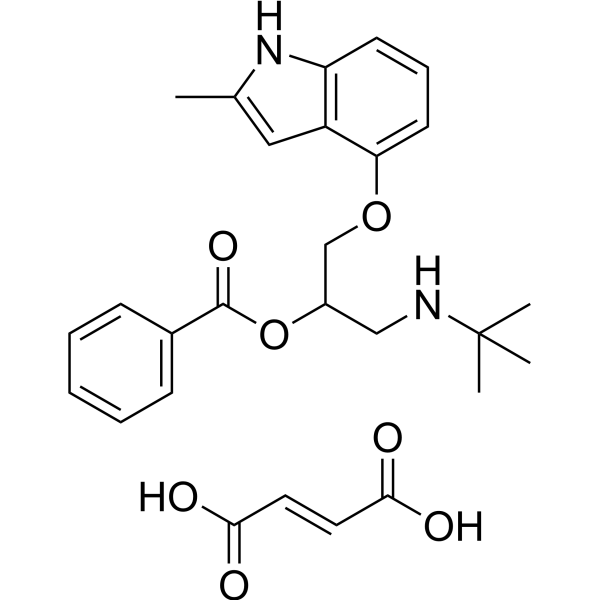 0 ImagesCat. No.: HY-B1562CCAS No.: 79125-22-7Synonyms: (±)-Bopindolol fumarateBopindolol ((±)-Bopindolol) fumarate is an orally active antagonist of β-adrenoceptors (ARs) with partial agonist activity. Bopindolol fumarate is non-selective for β1- and β2-ARs and has low affinity for β3-AR subtype. Bopindolol fumarate has intrinsic sympathomimetic as well as membrane stabilizing actions, inhibits renin secretion, and interacts with 5-HT receptors. Bopindolol fumarate is a proagent of Pindolol (HY-B0982). Bopindolol fumarate can be used for essential and renovascular hypertension research.
-
Bunolol
 0 ImagesCat. No.: HY-114833CAS No.: 27591-01-1Synonyms: (Rac)-Bunolol; dl-BunololBunolol ((Rac)-Bunolol) is a β-adrenergic receptor blocker. Bunolol antagonizes the β-receptor agonist activity induced by Isoproterenol (HY-B0468) and Dichloroisoproterenol. Bunolol reduces the heart rate and mean blood pressure of anesthetized dogs. Bunolol decreases spontaneous motor activity and Amphetamine-induced hyperactivity in rats, potentiates Pentobarbital-induced hypnosis in mice, and protects rats from extensor tonic convulsions induced by maximal electroshock.




